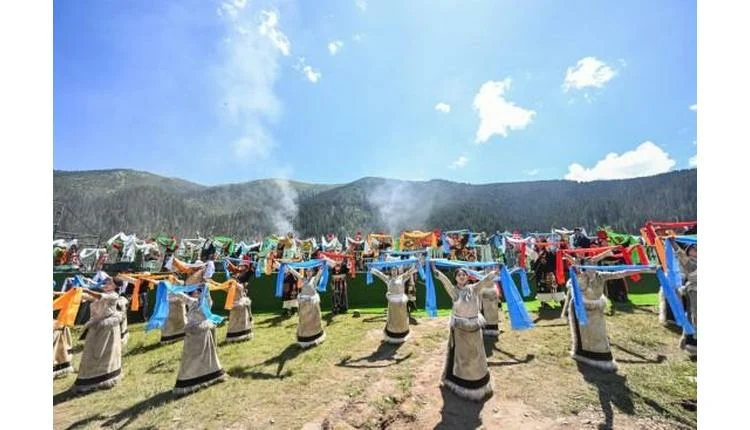
The 2026 Sichuan Ganzi Mountain Culture & Tourism Festival kicked off on 24 July at Yuke Grassland in Daofu County, Ganzi Tibetan Autonomous Prefecture, drawing travel industry attention to the region's nomadic heritage. The event, running through 26 July, offers a deep dive into Kham nomadic culture through performances, intangible cultural heritage (ICH) exhibitions, and folk experiences.
Opening ceremonies transformed the grassland into a living stage, with local herders demonstrating cattle driving and the assembly of black yak-hair tents. These scenes recreated the seasonal migration patterns of Kham communities. A procession of heavy cavalry and Gesar riders in traditional attire galloped across the plain, underscoring the area's epic traditions.
A parade of ethnic costumes blended ancient craft with modern fashion, featuring pulua, a traditional Tibetan handwoven wool textile, alongside contemporary designs. “As the scenes of nomadic migration unfolded, a yearning for a simpler pastoral life welled up within me,” said Zhang, a visitor from Beijing.
Key events and tourism impact
The festival includes eight major events, such as the Ganzi 1,000-person ICH livestream showcase and the Guozhuang gala. Grassland market activities offer ICH workshops, local produce exhibitions, and music gatherings, providing immersive cultural experiences for attendees.
Daofu County, with an average summer temperature of 24°C, has seen significant tourism growth. From July 2021 to June 2026, the county welcomed over 104 million tourists, generating nearly $1.57 billion (11.454 billion yuan) in tourism revenue. This surge highlights the appeal of cultural tourism in high-altitude destinations.
For travel professionals, the festival underscores the potential of niche cultural events to drive visitation. Similar initiatives, such as Goa's Chikhal Kalo festival, demonstrate how local traditions can attract global audiences. The Ganzi event also aligns with broader trends in experiential travel, where authenticity and heritage are key draws.
Tour operators and agents may find opportunities in packaging trips around such festivals, especially for clients seeking off-the-beaten-path experiences. The region's natural landscapes and cultural depth offer a compelling proposition for luxury and adventure travel segments alike.
As Asia's cultural tourism sector expands, events like this one could become benchmarks for destination marketing. The World Travel & Culture Expo 2026 in Bangkok further signals the region's commitment to leveraging heritage for tourism growth.
For hoteliers and hospitality providers, the festival's success in Daofu County suggests rising demand for accommodations near cultural hubs. The area's moderate summer climate and scenic landscapes make it a viable year-round destination, potentially attracting MICE groups and independent travelers.
The festival's emphasis on ICH and local crafts also opens avenues for partnerships with travel-tech platforms to enhance visitor experiences, such as virtual tours or digital storytelling. As fan-driven tourism reshapes travel patterns, cultural festivals offer a sustainable alternative that respects local traditions while driving economic benefits.