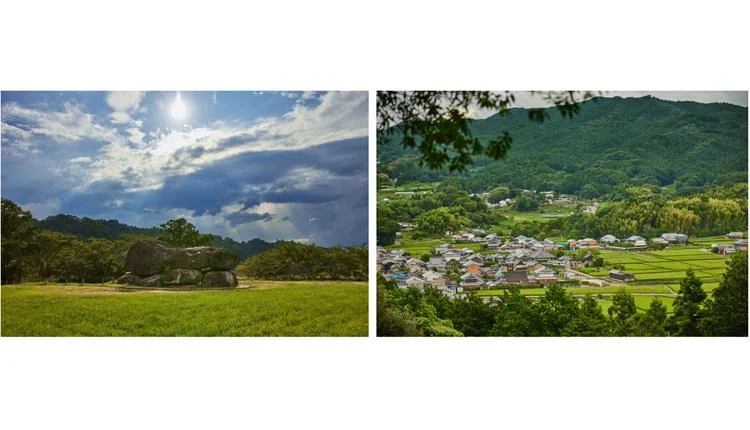
The Ancient Capitals of Asuka and Fujiwara were officially inscribed as a UNESCO World Heritage Site on 26 July 2026, marking a significant milestone for Japan's cultural tourism sector. This designation underscores the archaeological importance of Japan's earliest capitals, which flourished between the late sixth and early eighth centuries, and positions the Kii Peninsula as a key destination for travel professionals seeking to offer immersive historical experiences.
Strategic Implications for the Travel Industry
The Kii Peninsula, spanning Nara, Wakayama, and Mie prefectures, is often described as Japan's spiritual heart. It encompasses sacred mountains, ancient pilgrimage routes, and living cultural traditions. Hiroyasu Takeda, Vice Chair of the Kii Peninsula Tourism Authority, stated, "The inscription of Ancient Capitals of Asuka and Fujiwara marks an important new chapter for the Kii Peninsula. It invites travellers to continue their journey through some of Japan's most significant cultural and spiritual landscapes." This sentiment aligns with broader trends in cultural tourism, where UNESCO recognition often catalyzes increased visitor numbers and infrastructure investment.
For airlines, this development could stimulate demand on routes serving Kansai International Airport (KIX) and Chubu Centrair International Airport (NGO). Carriers such as ANA and Japan Airlines may see opportunities to promote packages that combine Tokyo or Osaka with the Kii Peninsula. Similarly, tour operators like Wendy Wu Tours, which recently partnered with ANA to drive year-round Japan bookings, can leverage this UNESCO listing to create itineraries that extend beyond the typical cherry blossom season. The region's appeal to cultural tourists also aligns with efforts to ease overtourism in Kyoto and Tokyo, as highlighted by Japan's prefectures using mascot IPs to drive rural tourism.
Accommodation and Extended-Stay Developments
Asuka is evolving as a destination for longer stays, with new accommodations enhancing its appeal. BRANCHERA Ishibutai Terrace and BRANCHERA VILLA ASUKA have already opened, offering boutique lodging that blends with the rural landscape. The upcoming HOSHINOYA Asuka, scheduled to debut in 2027, is expected to attract luxury travellers seeking deep immersion in Japan's ancient history. These developments mirror the strategy of other high-end properties in the region, such as the Fairmont resort opening in Niseko by early 2028, and signal growing confidence in the Kii Peninsula's tourism potential.
Visitors to Asuka can explore palace sites, temple ruins, and ancient burial mounds set within a rural landscape that has remained largely unchanged for centuries. The village itself functions as a living community, with rice fields, family-run cafés, and quiet country lanes offering an authentic glimpse into traditional Japanese life. This authenticity is a key selling point for travel agents and tour operators targeting culturally curious clients.
Expanding the Itinerary Beyond Asuka
Beyond Asuka, the Kii Peninsula offers a rich tapestry of destinations. Yoshino, renowned for its cherry blossoms, Mount Koya (Koyasan), a center of Shingon Buddhism, and the Kumano Kodo pilgrimage routes—a UNESCO World Heritage site in their own right—provide layered experiences. The journey culminates at Ise Jingu, Japan's most revered Shinto shrine. These sites collectively offer an immersive cultural experience, encouraging travellers to delve deeper into Japan's history and traditions. For MICE planners, the region's combination of spiritual sites and modern facilities could support unique incentive programs and corporate retreats.
The UNESCO designation also complements other cultural tourism initiatives in Japan, such as the recent recognition of Aalto Works in Helsinki, which boosted cultural tourism there. Similarly, the deepening ties between Japan and Southeast Asia ahead of the Fukuda Doctrine anniversary may further enhance inbound travel from that region. Travel technology platforms like Omio, which recently raised $10 million to accelerate growth in Japan and Southeast Asia, could play a role in facilitating multimodal travel across the Kii Peninsula, connecting airports, train stations, and local transport.
For travel professionals, the key takeaway is that the Kii Peninsula now offers a compelling, UNESCO-backed narrative that can be woven into diverse itineraries—from luxury tours to educational group travel. The combination of ancient capitals, sacred mountains, and emerging accommodations positions this region as a must-visit for culturally minded travellers in the coming years.